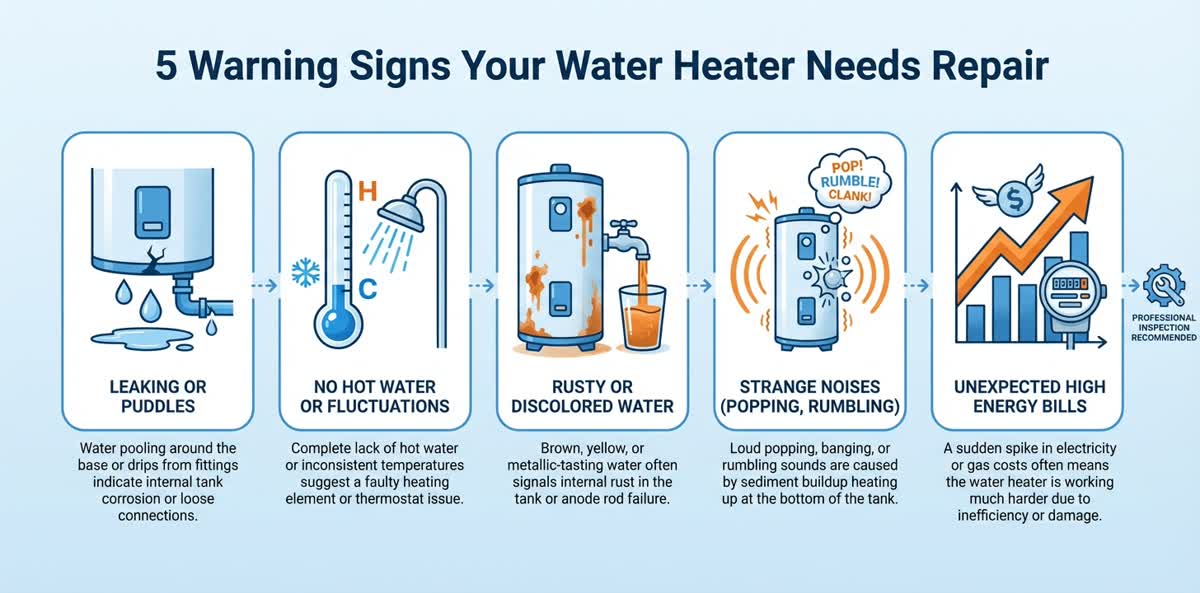
Nothing ruins a morning shower quite like a blast of cold water when you're expecting hot. If your water heater has been acting up—producing lukewarm water, making odd sounds, or dripping onto the floor—it's trying to tell you something. Ignoring these signs doesn't just mean uncomfortable showers; it can lead to higher electricity bills, water damage, or even safety hazards in your home.
Whether you live in a terrace house in Petaling Jaya, a condo in Mont Kiara, or a semi-D in Shah Alam, water heaters are essential in Malaysian homes. In this guide, we'll walk you through the most common warning signs that your water heater needs repair, what causes these problems, and when it's time to call a professional for water heater repair.
1. Your Water Heater Is Not Producing Hot Water
This is the most obvious sign—and the one that usually gets homeowners to pick up the phone. If you turn on the hot tap and get nothing but cold or lukewarm water, something is wrong.
Common Causes
- Faulty heating element: In storage-type water heaters, the heating element can burn out over time, especially in areas with hard water. This is one of the most common reasons for a water heater not producing hot water.
- Tripped thermostat: The thermostat regulates water temperature. If it malfunctions or trips, the element won't heat up at all.
- Electrical supply issue: Sometimes the problem isn't the heater itself but the power feeding it. A tripped circuit breaker or faulty wiring can cut power to your water heater without you realising.
Quick Check Before Calling an Electrician
Head to your DB box and check if the MCB (miniature circuit breaker) for your water heater has tripped. If it has, try resetting it. If it trips again immediately, stop using the heater and call a licensed electrician—there's likely a short circuit or earthing fault.
2. Water Heater Is Leaking
A leaking water heater is never something to ignore. Even small drips can cause significant damage over time—think mould growth on bathroom walls, damaged ceiling plaster (especially common in condos where heaters are ceiling-mounted), and even structural issues.
Where Leaks Typically Occur
- Inlet/outlet connections: Loose fittings or worn rubber washers at the pipe connections are the easiest leaks to fix.
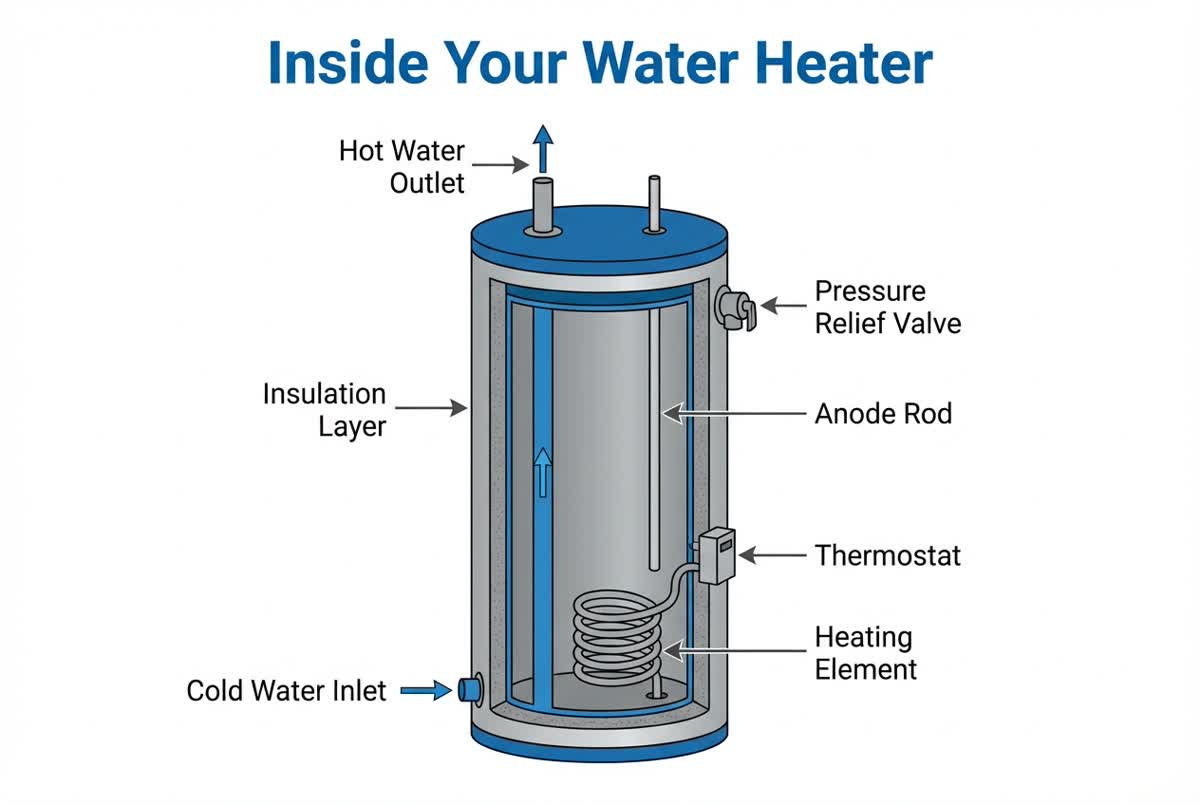
- Pressure relief valve: This valve releases water when internal pressure gets too high. If it's constantly dripping, the valve may be faulty or your water pressure may be too high.
- Tank itself: If the inner tank is corroded and leaking, the unit usually needs full replacement. Patching a corroded tank is not a long-term solution.
💡 Malaysian Climate Tip
Our tropical humidity accelerates corrosion in water heaters. If your unit is more than 8 years old, have it inspected annually. The anode rod—a sacrificial metal rod inside the tank designed to attract corrosion—should be checked and replaced every 3-5 years to extend the tank's lifespan.
3. Strange Noises Coming from the Heater
Popping, rumbling, crackling, or banging sounds from your water heater are not normal. These noises usually point to sediment buildup at the bottom of the tank.
In Malaysia, our water supply can carry minerals and sediment that gradually settle inside the tank. As the heating element heats the water, these deposits get superheated and create those unsettling sounds. Left unchecked, sediment buildup reduces heating efficiency (meaning higher TNB bills) and can eventually damage the heating element or inner tank lining.
What to Do
A professional can flush the tank to remove sediment buildup. For storage water heaters, this should ideally be done once a year. If the noises persist after flushing, the heating element may need replacement.
4. Discoloured or Rusty Water
If the hot water coming from your taps looks brown, yellow, or has visible rust particles, your water heater's inner tank or anode rod is likely corroding. This is especially common in older units that haven't had their anode rod replaced.
Before blaming the heater, though, check if the discolouration happens with cold water too. If it does, the issue might be with your home's piping rather than the heater. Older terrace houses and bungalows with galvanised iron pipes are particularly prone to this problem.
When Rusty Water Means Replacement
If the discolouration is only from the hot water side and your heater is over 10 years old, it's often more cost-effective to replace the unit entirely rather than repairing it. A new energy-efficient water heater can pay for itself through lower electricity bills within 2-3 years.
5. Fluctuating Water Temperature
Getting scalding hot water one moment and cold the next? Temperature inconsistency is a classic sign of a failing thermostat or heating element. In instant (tankless) water heaters—popular in many Malaysian condos and apartments—this can also indicate insufficient electrical supply or a clogged flow sensor.
Temperature fluctuations aren't just annoying; they can be dangerous. Sudden bursts of very hot water can cause scalding, particularly concerning for households with young children or elderly family members.
6. Higher Than Normal Electricity Bills
If your TNB bill has crept up but your usage habits haven't changed, your water heater could be the culprit. A struggling heater works harder and longer to heat water, consuming more electricity in the process.
Common efficiency killers include:
- Sediment-coated heating elements that take longer to heat water
- Failing thermostats that keep the element running continuously
- Poor insulation in older units, causing heat loss
- Leaks that force the heater to constantly reheat replacement water
An inefficient 3kW storage water heater can easily add RM30-50 per month to your electricity bill compared to a properly functioning unit. Over a year, that's RM360-600 wasted.
7. The Unit Is Simply Old
Most water heaters in Malaysia have a lifespan of 8-12 years, depending on the brand, water quality, and maintenance history. If your unit is approaching or past this age, problems become increasingly frequent and repairs less worthwhile.
Check the manufacturing date on the serial number sticker (usually on the side of the unit). If you can't find it, and you've been in your home for more than a decade without replacing the heater, it's likely due for an upgrade.
💡 Safety First
An ageing water heater with degraded earthing or worn wiring can pose an electrocution risk, especially in wet bathroom environments. If you haven't had an electrical safety inspection recently, it's worth scheduling one alongside your water heater check.
Storage vs. Instant Water Heaters: Different Problems
The type of water heater you have affects what issues you're likely to encounter:
Storage (Tank) Water Heaters
- More prone to leaking and sediment buildup
- Anode rod degradation over time
- Higher standby energy loss
- Typically last 8-12 years
- Common brands in Malaysia: Joven, Alpha, Ariston
Instant (Tankless) Water Heaters
- Heating element failure from hard water scale
- Flow sensor and temperature sensor issues
- Electrical connection problems due to high current draw
- Typically last 10-15 years with proper maintenance
- Common brands: Panasonic, Joven, Rinnai
When to DIY vs. When to Call a Professional
Some minor checks you can safely do yourself:
- Check if the MCB has tripped and reset it (once only)
- Inspect visible pipe connections for obvious leaks
- Check the power socket and plug for burn marks or a loose connection
- Test if the issue is only with hot water or both hot and cold
Call a professional immediately if:
- The MCB trips repeatedly when you switch on the heater
- You see burn marks on the plug, socket, or wiring
- There's a burning smell near the unit
- The tank is visibly leaking from the body (not fittings)
- You experience electric shocks or tingling when touching the water
Important Safety Warning
Never attempt to open or repair a water heater yourself unless you're a licensed electrician. Water heaters combine electricity and water—two things that are deadly together. In Malaysia, all electrical work should be carried out by a licensed wireman registered with Suruhanjaya Tenaga (the Energy Commission).
How Much Does Water Heater Repair Cost in Malaysia?
Here's a rough guide to common water heater repair costs:
- Thermostat replacement: RM80 – RM180 (parts + labour)
- Heating element replacement: RM100 – RM250
- Pressure relief valve replacement: RM60 – RM150
- Anode rod replacement: RM80 – RM200
- Full unit replacement (supply + install): RM350 – RM1,200 depending on type and brand
As a rule of thumb, if repair costs exceed 50% of the price of a new unit, replacement is usually the smarter choice. If it's beyond repair, you'll need a replacement — read our guide on instant vs storage water heaters to choose the right type.
Frequently Asked Questions
How long should a water heater last in Malaysia?
Most water heaters last 8-12 years in Malaysia. The tropical humidity and mineral content in our water supply can shorten lifespan compared to cooler, drier climates. Regular maintenance—especially anode rod checks and tank flushing—can help your unit reach the upper end of that range.
Is it safe to use a water heater that's making noises?
Occasional mild sounds can be normal, but persistent popping, banging, or rumbling indicates sediment buildup and should be addressed. While not immediately dangerous, continued use without servicing can lead to element failure or tank damage. Have it inspected sooner rather than later.
Can a leaking water heater cause electrocution?
Yes, it can. If water from a leaking heater reaches electrical components or if the unit's earthing is compromised, there's a real risk of electric shock. This is why proper earthing and an ELCB (earth leakage circuit breaker) in your DB box are absolutely essential. If you notice any leak, switch off the heater at the DB box immediately and call a professional.
Should I repair or replace my old water heater?
If your unit is less than 5 years old, repair is usually worthwhile. Between 5-8 years, it depends on the severity and cost of the repair. Beyond 8-10 years, replacement is generally the better investment—newer models are more energy-efficient and come with fresh warranties.
Don't Wait Until It's an Emergency
Most water heater failures don't happen overnight. The signs build up gradually—slightly cooler water, an occasional drip, a faint rumbling sound. Catching these early means simpler, cheaper repairs and avoids the nightmare scenario of a burst tank flooding your bathroom ceiling or, worse, an electrical fault in a wet area.
If you've noticed any of the warning signs above, get your water heater checked by a qualified electrician. A 30-minute inspection can save you thousands in water damage repairs and give you peace of mind every time you step into the shower. Regular maintenance prevents most issues — find out the recommended service frequency for water heaters.