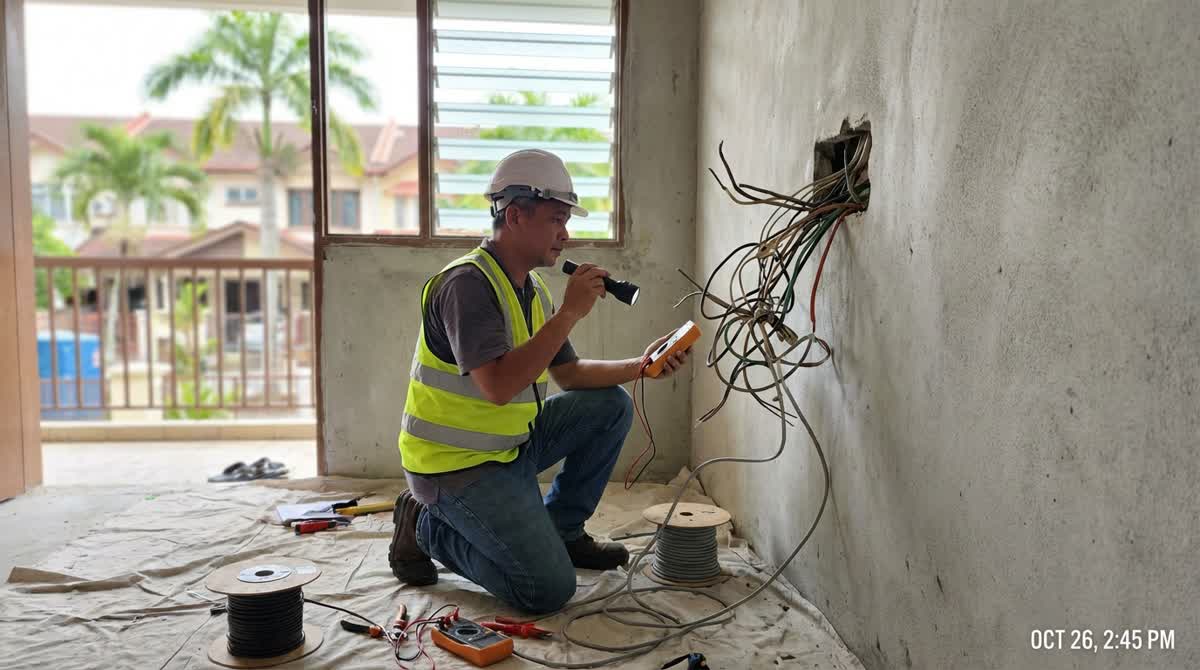
If your home is more than 20 years old, chances are the topic of house rewiring has come up — whether from an electrician during a repair visit, a contractor during renovation planning, or after one too many tripped breakers. The big question most Malaysian homeowners face is: do I need to rewire the entire house, or can I get away with just rewiring part of it?
It's a fair question. A full rewire is a significant investment, and nobody wants to spend more than necessary. But a partial rewire done at the wrong time can end up costing you more in the long run — or worse, leave hidden safety hazards in your walls. In this guide, we'll break down both options so you can make an informed decision about your home's electrical wiring.
Understanding House Rewiring
Before we compare partial and full rewiring, let's clarify what rewiring actually involves. House rewiring means replacing the electrical cables that run through your walls, ceilings, and floors — the ones that connect your DB board (distribution board) to every power point, light switch, and appliance outlet in your home.
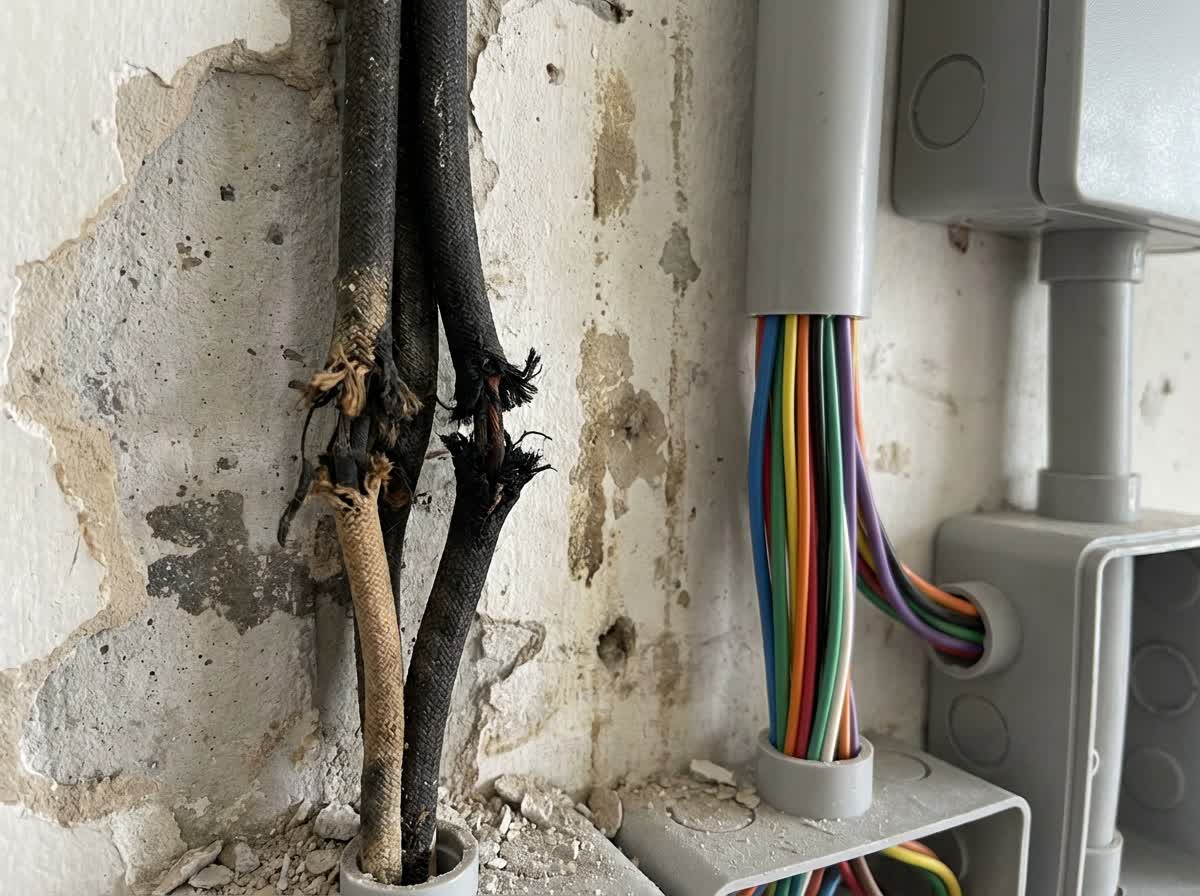
In Malaysia, most terrace houses, semi-Ds, and bungalows built before the early 2000s used PVC-insulated cables that have a practical lifespan of 25-30 years. Over time, the insulation degrades from heat, moisture, and the general wear of our tropical climate. When it deteriorates enough, you get problems: short circuits, tripping breakers, flickering lights, and in the worst cases, electrical fires.
What Is a Partial Rewire?
A partial rewire targets specific sections or circuits in your home rather than replacing everything. You might rewire just the kitchen, a single floor, or specific circuits that are showing problems.
When a Partial Rewire Makes Sense
- Only one area has issues: If your kitchen circuits keep tripping but the rest of the house is fine, rewiring just the kitchen circuit may be sufficient.
- Recent renovation in one section: If you've renovated your ground floor recently and it has new wiring, but the upper floor still has old cables, you only need to address the upper floor.
- Adding new circuits: When you're adding a new high-power appliance like an EV charger, air conditioning system, or a water heater, you may need new dedicated circuits without touching the existing ones.
- Budget constraints: Sometimes a full rewire isn't financially feasible right now, and addressing the most critical circuits first is a practical interim solution.
- Relatively newer home: If your house is 15-20 years old and only certain areas show wear, a targeted approach can extend the life of the overall system.
Typical Partial Rewire Cost in Malaysia
For a standard double-storey terrace house, a partial rewire typically costs between RM2,000 and RM6,000, depending on which circuits and how many points are involved. A kitchen rewire alone might cost RM1,500-RM3,000, while rewiring an entire floor could run RM3,000-RM5,000.
Important Consideration
A partial rewire means your home will have a mix of old and new wiring. The connection points between old and new cables need to be done properly with appropriate junction boxes and connectors. Poorly done junctions are a common source of problems down the line, so always use a licensed electrician for this work.
What Is a Full Rewire?
A full rewire replaces every cable in your home — from the meter board to the DB board, and from the DB board to every single power point, light switch, fan point, and appliance outlet. It also typically includes upgrading the DB board itself, installing new MCBs (miniature circuit breakers) and an RCCB/ELCB for earth leakage protection.
When a Full Rewire Is the Right Choice
- Home is over 25-30 years old: If the original wiring has never been replaced, it's likely past its safe working life. Many terrace houses in areas like PJ, Shah Alam, and Subang were built in the 1980s and 1990s — their wiring is due for replacement.
- Multiple circuits showing problems: If you're experiencing issues in several areas — tripping in the kitchen, flickering lights upstairs, warm sockets in the living room — patching individual circuits becomes a game of whack-a-mole.
- Planning a major renovation: If you're already tearing down walls for a kitchen extension or bathroom remodel, it's the ideal time to rewire. The walls are already open, which significantly reduces labour costs.
- Aluminium wiring: Some older Malaysian homes used aluminium wiring, which is a known fire hazard. If your home has aluminium cables, a full rewire with copper is strongly recommended.
- Undersized wiring: Older homes were wired for much lower electrical loads. A house built in 1985 didn't account for multiple air conditioners, electric water heaters, induction cooktops, and EV chargers. The original 1.5mm² cables simply can't handle modern demand.
- No earth leakage protection: If your DB board doesn't have an ELCB/RCCB, a full rewire is the opportunity to bring your entire system up to current Malaysian wiring standards (MS IEC 60364).
Typical Full Rewire Cost in Malaysia
A full rewire for a standard double-storey terrace house in Malaysia typically costs between RM8,000 and RM18,000. Here's a rough breakdown by property type:
- Single-storey terrace: RM5,000 – RM10,000
- Double-storey terrace: RM8,000 – RM18,000
- Semi-D: RM12,000 – RM25,000
- Bungalow: RM18,000 – RM40,000
- Condo/apartment: RM4,000 – RM10,000
These ranges depend on the number of power points, the complexity of the layout, accessibility of cable routes, and whether you're doing it alongside a renovation (cheaper) or as a standalone project (more expensive due to the need to chase walls and make good afterwards).
💡 Cost-Saving Tip
If you're planning a renovation anyway — kitchen remodel, bathroom upgrade, or adding rooms — that's the best time to do a full rewire. When walls are already being opened up for tiling or plastering, the electrician can run new cables with minimal additional hacking. This can save 30-40% on labour compared to rewiring as a standalone project.
Partial vs Full Rewire: A Direct Comparison
Cost
A partial rewire is obviously cheaper upfront — typically 30-50% of a full rewire cost. However, if you end up doing multiple partial rewires over the years as different circuits fail, the total cost can exceed what a single full rewire would have been. Each partial rewire requires its own mobilisation, wall chasing, plastering, and repainting.
Disruption
A partial rewire causes less disruption — usually 1-3 days for a specific area. A full rewire for a double-storey terrace typically takes 5-7 working days, during which certain areas of the house will be without power. Most families choose to stay elsewhere during a full rewire, or have it done room by room over a longer period.
Safety
A full rewire gives you complete peace of mind. Every cable is new, every connection is fresh, and the entire system meets current safety standards. A partial rewire addresses immediate risks but leaves old wiring in place elsewhere — wiring that will continue to age and may develop problems later.
Property Value
If you're planning to sell your home, a full rewire is a strong selling point. Buyers (and their inspectors) will be reassured by a complete wiring certificate. A partial rewire doesn't carry the same weight, as buyers will still question the condition of the unreplaced sections.
Future-Proofing
A full rewire lets you design the system for modern and future needs — more power points in the kitchen, dedicated circuits for air conditioners, provision for EV charging, smart home wiring, and properly rated cables throughout. A partial rewire is limited to the specific area being addressed.
How to Decide: A Practical Framework
Here's a simple decision framework we use when advising homeowners:
Choose a Partial Rewire If:
Your home is less than 20 years old, only one specific area has issues, the DB board is in good condition with proper ELCB protection, you're not planning a major renovation, and budget is a primary concern right now.
Choose a Full Rewire If:
Your home is over 25 years old, multiple areas show electrical problems, your DB board is outdated (no ELCB, old-style rewirable fuses), you're planning a renovation anyway, you have aluminium or visibly degraded wiring, or you're seeing signs that your home needs rewiring.
What About Condos and Apartments?
Condos present a slightly different situation. The wiring is typically contained within the unit's walls and ceiling — there's no attic or underfloor space to route cables through. This means rewiring a condo often involves more wall chasing and plaster repair compared to a landed property where cables can sometimes be routed through roof spaces.
On the positive side, condos are usually smaller, so even a full rewire costs less — typically RM4,000-RM10,000 for a standard 3-bedroom unit. Many condo owners opt for a full rewire when they do their first major renovation after moving in, especially for units in older buildings like those in Bangsar, Damansara, or Taman Tun.
The Inspection First Approach
If you're unsure whether you need a partial or full rewire, the smartest first step is getting a professional electrical inspection. A licensed electrician can test your existing wiring using insulation resistance testing and earth continuity testing to assess the actual condition of your cables — not just guess based on age.
This inspection typically costs RM200-RM500 and gives you hard data on which circuits are still in good shape and which are deteriorating. With this information, you can make an evidence-based decision rather than relying on guesswork.
Common Mistakes to Avoid
- DIY rewiring: In Malaysia, all electrical wiring work must be carried out by a licensed wireman registered with Suruhanjaya Tenaga (Energy Commission). DIY wiring is not just illegal — it's genuinely dangerous and will void your home insurance.
- Choosing the cheapest quote: With rewiring, you truly get what you pay for. Cheap quotes often mean undersized cables, fewer circuits, and corners cut on safety. Always verify your electrician's PW (Pendawai) license.
- Ignoring the DB board: New wiring connected to an old, undersized DB board defeats the purpose. If you're rewiring, upgrade the DB board at the same time.
- Not planning for the future: When rewiring, add extra circuits and power points. It costs very little extra during rewiring but is expensive to add later. Think about where you might want EV charging, a home office setup, or additional kitchen appliances.
Frequently Asked Questions
How long does a full house rewire take in Malaysia?
For a standard double-storey terrace house, expect 5-7 working days for the electrical work. If you include plastering and repainting (making good the walls), add another 3-5 days. If the rewire is done alongside a renovation, the electrical work is integrated into the overall renovation timeline.
Do I need to move out during a rewire?
For a full rewire, most families find it easier to stay elsewhere for at least the first 3-4 days when the main circuits are being replaced. For a partial rewire affecting just one area, you can usually stay in the house with some inconvenience. Your electrician should plan the work to minimise disruption — for example, ensuring you have power to the kitchen and at least one bathroom each evening.
Will rewiring damage my walls and ceilings?
Yes, some wall chasing (cutting channels into walls) is necessary to route new cables. A good electrician minimises this by reusing existing cable routes where possible and routing cables through accessible spaces like roof voids. The chased walls are then plastered and repainted. This is why combining rewiring with a renovation makes so much sense — the walls are being refinished anyway.
Can I rewire my house in stages?
Yes, and this is actually a common approach for homeowners on a budget. You might rewire the kitchen and ground floor this year, then do the upper floor next year. The key is to have a licensed electrician plan the full scope upfront so that each stage connects properly to the next. Your DB board should be upgraded at the first stage to accommodate the eventual full system.
How do I know if my wiring is still safe?
The most reliable way is an insulation resistance test performed by a licensed electrician. Visual signs that suggest your wiring needs attention include frequent circuit breaker tripping, discoloured or warm power sockets, flickering lights, a burning smell near outlets, and visible cable damage where wiring is exposed (like in the roof space or meter area).
The Bottom Line
There's no one-size-fits-all answer to the partial vs full rewiring question. It depends on your home's age, the condition of existing wiring, your renovation plans, and your budget. What we can say with certainty is this: don't ignore electrical warning signs. Whether you go for a targeted partial rewire or a comprehensive full rewire, addressing deteriorating wiring before it causes a fire or electrocution is always the right call.
If you're unsure where to start, book an electrical inspection. It's a small investment that gives you the clarity to make the right decision for your home and your family's safety.